Cement stucco · Kingston & Ulster County
Cement stucco repair and three-coat plaster in Kingston
Older homes in Midtown Kingston, brick-and-plaster storefronts near the Rondout and commercial block walls across Ulster County often wear hard Portland cement stucco rather than foam-backed EIFS. We repair, refinish and install traditional stucco using proper lath, screeds and breathable finishes.
Book spring work now. Winter assessments and estimates available.
Updated November 2026
Short answer
We repair cracked or hollow Portland cement stucco, refinish weathered plaster elevations and apply new three-coat stucco across Kingston and Ulster County. Our own crew sounds the wall, cuts out delaminated sections, replaces rusted metal lath, restores drainage clearances and floats matching sand, dash or smooth textures without trapping moisture.
Key facts
- Service area
- Kingston and Ulster County: Saugerties, Port Ewen, Rosendale, Hurley, Woodstock, Stone Ridge and New Paltz.
- Season
- EIFS and stucco finishes need about 40 °F and rising, with no freezing for 24 hours. In the Hudson Valley that means spring through late fall.
- Who does the work
- Our own crews, from The Dom Construction Group LLC.
- Insurance
- General liability, umbrella and workers' compensation insurance; certificates on request.
- Estimates
- Free. Start with 3–5 photos by text, or use the form.
- Reply
- We reply within one business day, Monday to Friday.
Hard-coat cement stucco vs. synthetic EIFS on Ulster County buildings
Property owners across Kingston, Saugerties, New Paltz and Woodstock often call any textured plaster wall stucco, even though two completely different assemblies show up on Hudson Valley buildings. Traditional hard-coat stucco is roughly seven-eighths of an inch of Portland cement, lime and sand troweled over metal lath, wood lath or masonry block. Knocking on it produces a sharp, solid rap. Synthetic stucco—covered on our EIFS repair page—places thin fiberglass-reinforced base coat and acrylic finish over rigid foam insulation, giving a warmer, hollow sound when tapped.
Telling the two apart before opening a bucket matters because repair mortars do not cross over cleanly. Smearing rigid cement mortar onto flexible EIFS lamina cracks along the patch edge within one winter, while skimming thin synthetic patch compound directly onto crumbling, damp lime-cement plaster peels off as vapor pushes outward. With roughly 19 years of team experience across EIFS, stucco, masonry and coatings, our crews inspect the substrate first and match mortar chemistry, joint layout and finish permeability to the wall you actually own.
Cutting out hollow spots, rusted lath and freeze-thaw spalls
Ulster County freeze-thaw cycles punish cement stucco wherever bulk water slips behind the plaster skin. Once moisture saturates wood sheathing or corrodes expanded metal lath, winter ice jacks the mortar away from framing until broad sections sound hollow or belly outward. Surface caulking over those cracks only holds water inside longer. Most stucco failures we open trace back to a handful of field details:
- Buried or missing weep screeds where stucco runs straight into soil, asphalt driveways or concrete sidewalks and wicks splashback upward
- Diagonal corner cracks at windows and doors caused by missing sill pans, split perimeter caulk or unjointed plaster spans
- Delaminated sheets and rusted lath beneath leaking roof-to-wall intersections, chimney shoulders and uncapped parapets
- Peeling non-breathable house paint that trapped seasonal vapor inside older masonry-backed plaster until the outer coat crumbled
For durable repairs, we score clean saw-cut boundaries back to firmly attached plaster, strip wet paper and corroded metal lath, repair damaged sheathing, tie in fresh weather-resistive barrier with proper lap direction so upper layers shed over lower layers, fasten galvanized or stainless lath into studs, and build scratch and brown coats back flush before floating a texture coat blended to neighboring sand, dash or smooth trowel work.
New three-coat stucco and full-wall breathable refinishing
On additions, dormers, commercial block walls and full re-clads, we apply traditional three-coat cement stucco built for northern climates. Over framed walls, we install two layers of water-resistive barrier or a ventilated drainage mat so incidental moisture has a clear path down to a corrosion-resistant weep screed set well above grade and paving. Casing beads and expansion joints break wide elevations into manageable panels that absorb initial cement curing shrinkage without random spider cracking. Each base coat cures properly before finish goes on—whether traditional colored cement stucco or a crack-resistant acrylic finish coat over cured brown coat.
Where an older stucco house or Uptown Kingston commercial facade is still structurally tight on the lath but scarred by mismatched old patches, hairline shrinkage cracks and decades of chalky paint, tearing off sound plaster is rarely necessary. After low-pressure cleaning and crack detailing, we bridge surface irregularities with polymer-modified base coat and roll or spray a vapor-permeable acrylic or elastomeric coating—similar in weather protection to our EIFS recoating and waterproofing work—so the entire wall sheds rain in one even color while still breathing.
Own crews, pipe scaffold and Hudson Valley curing windows
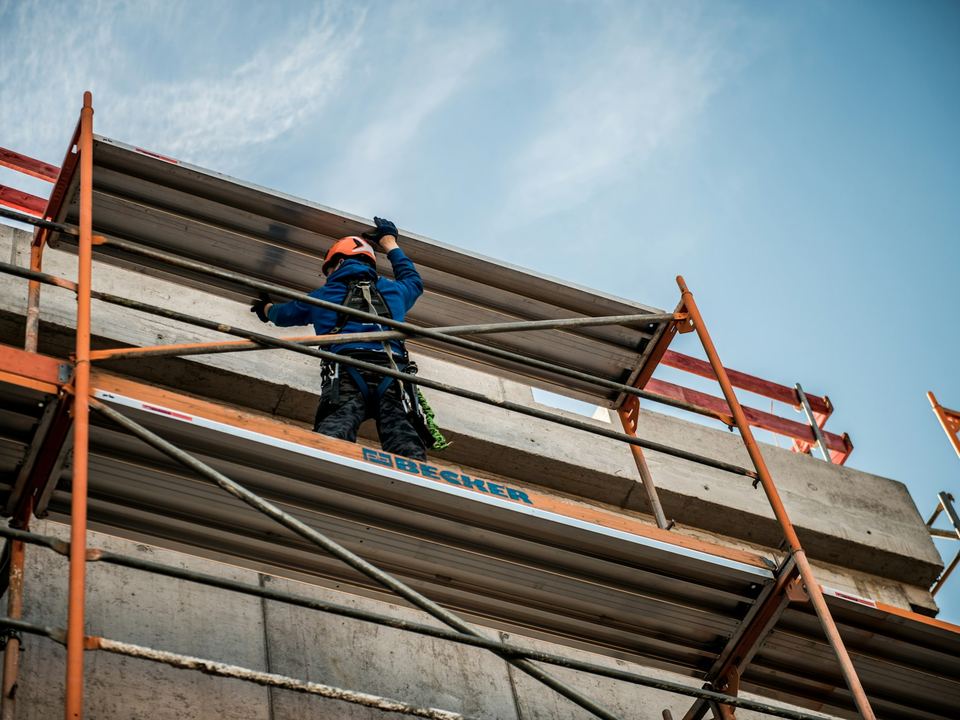
Good plaster work requires standing comfortably at chest height along the wall rather than stretching off ladders while mortar sets. The Dom Construction Group LLC owns and erects our own supported pipe scaffolding, allowing our crew to float flat planes and maintain continuous wet edges across multi-story gables and storefronts. We carry general liability, umbrella and workers' compensation insurance, work cleanly around landscaping and occupied entrances, and schedule cement and acrylic applications inside reliable above-freezing Hudson Valley weather windows from spring into fall. Call or text (845) 443-7902 to review your stucco walls.
Traditional cement stucco questions
How do I tell whether my building has hard cement stucco or EIFS?
Tap firmly on the wall with your knuckles or the handle of a screwdriver. Traditional Portland cement stucco is roughly seven-eighths of an inch of dense mortar over lath or masonry and gives a hard, solid rap, while foam-insulated EIFS sounds hollow and yields slightly when pressed hard. Checking a bottom edge or damaged corner also shows either metal lath and gray mortar or white/gray foam board beneath a thin mesh-reinforced base coat.
Can cracked or spalling stucco be patched without redoing the whole wall?
Yes, when surrounding plaster is still tightly keyed to sound lath and dry sheathing. We saw-cut clean borders back to solid stucco, replace any rusted metal lath and damaged building paper, and step in scratch, brown and finish coats feathered to match existing texture. Because weathered walls fade unevenly over decades, rolling a breathable acrylic or elastomeric coating corner to corner afterward hides color differences completely.
Why does stucco crack or bulge near the bottom of framed walls?
When stucco runs straight down into soil, mulch, asphalt or concrete sidewalks without a clearance gap and weep screed, ground moisture wicks upward into the mortar and wood framing. Winter freeze-thaw cycles then expand that trapped water, rusting the metal lath and pushing plaster outward in hollow bellies. Cutting the bottom back above paving and installing a proper weep screed stops recurring splashback damage.
Can traditional stucco be painted with regular exterior house paint?
Standard film-forming latex house paints often peel on cement stucco because they restrict water vapor trying to escape outward through the masonry or plaster pores. Breathable 100-percent acrylic stucco coatings, mineral coatings or vapor-permeable elastomeric coatings formulated for masonry and plaster shed wind-driven rain while letting seasonal moisture diffuse safely.
Send photos of cracked or hollow stucco walls
Call or text (845) 443-7902 with one close-up of the crack or spall and one wide shot showing wall height and ground access.
Related facade services in Ulster County
- EIFS and Dryvit repair
Not sure if your wall is hard cement stucco or foam-insulated EIFS? See how synthetic stucco repairs differ.
- Facade waterproofing
Perimeter window sealants, parapet copings, kick-out flashing and breathable wall coatings.
- Pipe and frame scaffolding
Our own supported scaffold set up safely for multi-story plastering and facade work.
Bulging plaster, step cracks or flaking paint on stucco?
Book spring work now. Winter assessments and estimates available.