EIFS & Dryvit repair
Wet sheathing cut-outs, window corner cracks, woodpecker holes, kick-out flashing and sealant joints.
Kingston · Ulster · Woodstock · Saugerties · New Paltz
We focus on Dryvit- and Sto-type foam-board walls on 1990s and 2000s homes, medical offices and Route 9W storefronts: finding hidden moisture, fixing flashing and sealant leaks, and leaving a clean, uniform finish.
Book spring work now. Winter assessments and estimates available.
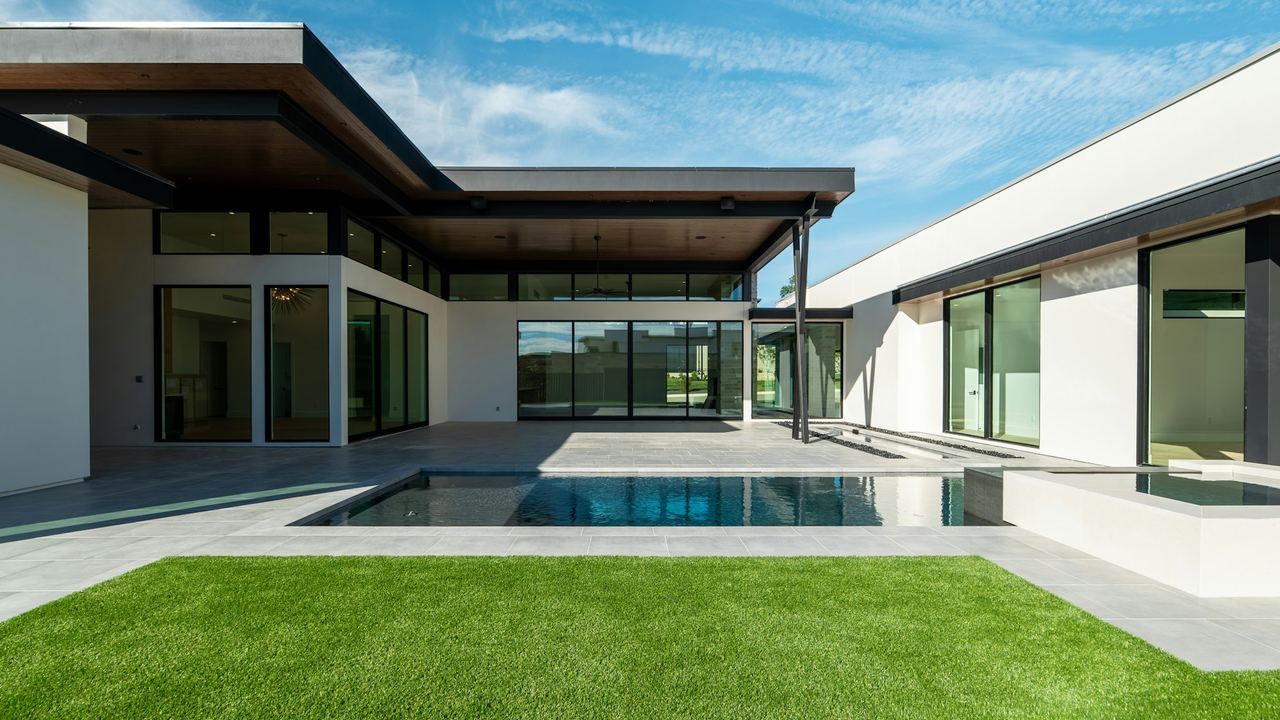
Photo: Stock photo
Targeted moisture repairs, full-elevation breathable coatings, modern water-managed re-clads and commercial facade scopes.
Wet sheathing cut-outs, window corner cracks, woodpecker holes, kick-out flashing and sealant joints.
Breathable acrylic and elastomeric coatings for faded, chalky or mismatched EIFS elevations.
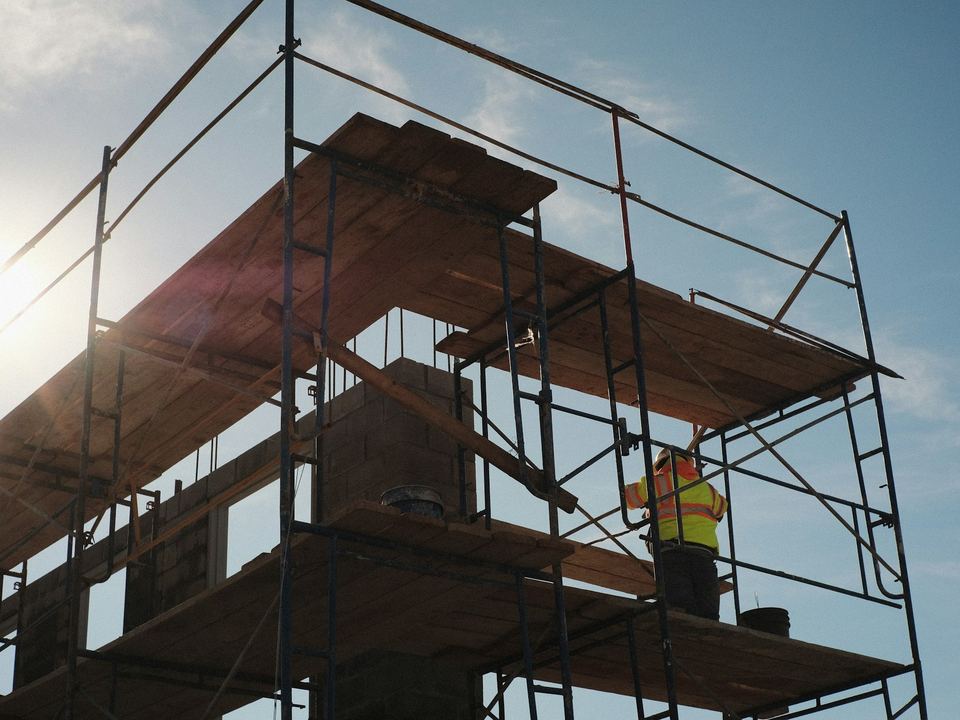
Water-managed EIFS with fluid-applied barriers and weep tracks on new builds, additions and re-clads.
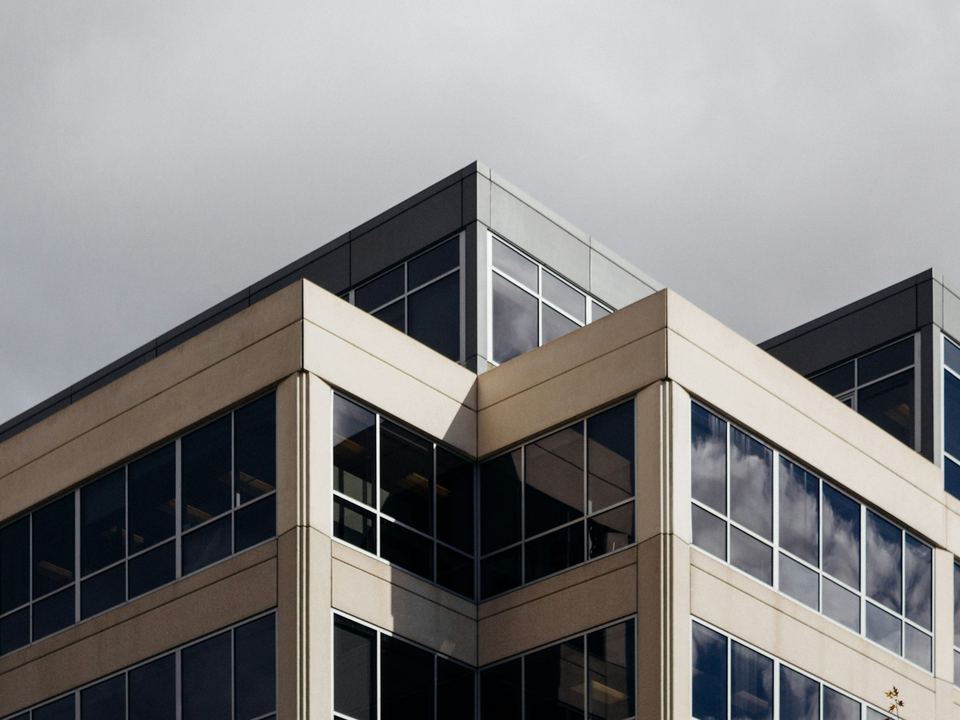
Storefronts, medical buildings, sign bands and GC subcontracts along Route 9W, Route 28 and Kingston.
Four spots where we most often find water getting behind 1990s and 2000s foam-board cladding.
Vertical dirt tracks or damp marks dropping straight from the bottom corners of vinyl or clad windows.
Swollen, cracked or algae-streaked wall areas directly beneath the lower end of a sloped roof.
Round holes pecked through the finish into white foam, or split horizontal joints along decorative bands.
Soft bottom edges or bubbling finish where EIFS meets mulch, walkways, asphalt or wooden deck ledgers.
A clear four-step process whether you own a house in Hurley or manage a retail building on Route 9W.
Send one tight close-up, one wide shot of the whole elevation, and your town. You get a first read within one business day.
On site, we inspect flashings, window perimeters, roof junctions and base clearances, probing suspect areas to see what is wet.
You receive a free written estimate spelling out cut-out areas, flashing or sealant upgrades, and patch versus recoat pricing.
Our own insured crew repairs the assembly, matches texture or coats corner to corner, and leaves the property clean.
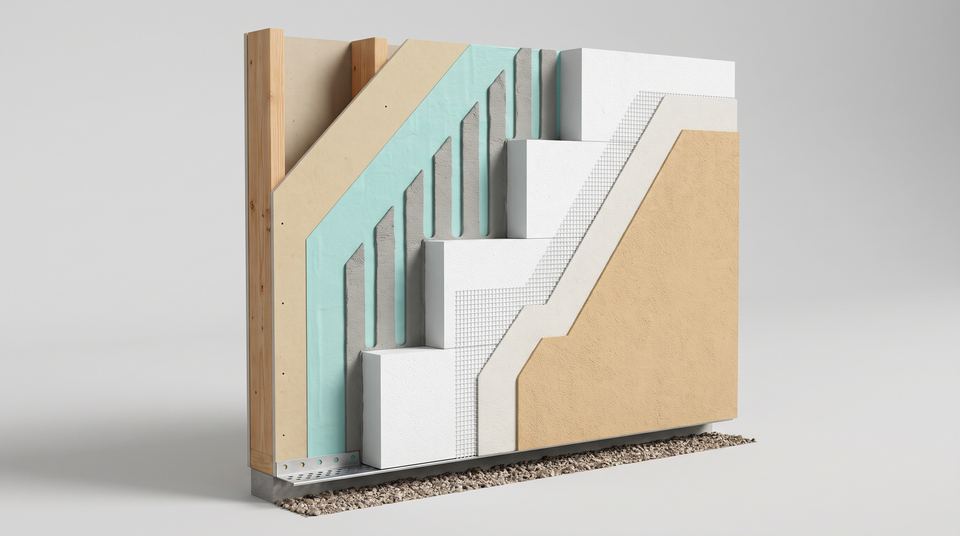
Across Kingston and Ulster County, custom houses, medical offices and roadside retail buildings put up during the 1990s and early 2000s were often clad in barrier-style EIFS, commonly called Dryvit after one manufacturer. Those walls glue expanded polystyrene foam straight onto plywood or oriented strand board without a drainage gap behind the insulation. As long as every window perimeter, roof junction and penetration stays sealed, the assembly stays dry. Once a kick-out flashing is omitted or window caulk splits, rainwater slips behind the foam and cannot easily dry outward through the acrylic finish.
Because the fiberglass-reinforced surface coat flexes without crumbling right away, an EIFS elevation can look sound from the driveway while damp sheathing softens underneath. Knowing the 8 signs your EIFS has water behind it helps you catch localized leaks before framing repairs grow larger.
Ulster County puts synthetic stucco through two distinct sets of conditions, and we build repairs around both:
Because our own crew handles EIFS foam, reinforcing mesh, flashing upgrades, backer-rod sealant joints and breathable coatings under one written scope, you do not have to coordinate separate caulking, siding and painting contractors. Where an older wall is too wet to patch economically, we also install modern drainage EIFS with a dedicated water barrier and weep track.
Kingston EIFS is operated out of Albany by The Dom Construction Group LLC for Ulster County homeowners, property managers and general contractors. Read more about our crew and past EIFS work.
AI-generated illustration
Your name and phone number are enough to start. Attach one close-up and one full-wall photo if you have them.
Tap the wall with your knuckles. EIFS—often called Dryvit—sounds hollow and gives slightly under firm thumb pressure because a thin fiberglass-reinforced coat sits over expanded polystyrene foam board. Traditional cement stucco is troweled thick over metal lath or masonry and feels rock-solid like concrete. Knowing which material you have determines the repair mix, sealant type and coating chemistry the wall requires.
Most EIFS installed during that era was barrier-style cladding glued directly onto plywood or oriented strand board without a drainage gap or secondary water barrier behind the foam. When builders omitted kick-out flashings at roof edges, skipped sill pans or relied on narrow caulk joints around windows, rainwater slipped behind the insulation and stayed trapped against the wood sheathing.
Our company office is in Albany at 401 New Karner Rd, 3rd Floor, Unit 301, and we do not operate a separate Kingston storefront. Our crews travel down I-87 regularly for residential and commercial EIFS work throughout Kingston, Ulster, Saugerties, Woodstock, Hurley, Stone Ridge, New Paltz and neighboring Ulster County communities. Reviewing wall photos ahead of time keeps site visits efficient.
Polymer base coats, acrylic textured finishes and perimeter sealants require air and wall temperatures around 40 °F and rising, with no freezing temperatures for at least 24 hours while the material cures. Because of upstate frost cycles, full finish work runs from spring into late fall. Site visits, moisture evaluations, written estimates and temporary weather protection can still happen year-round.
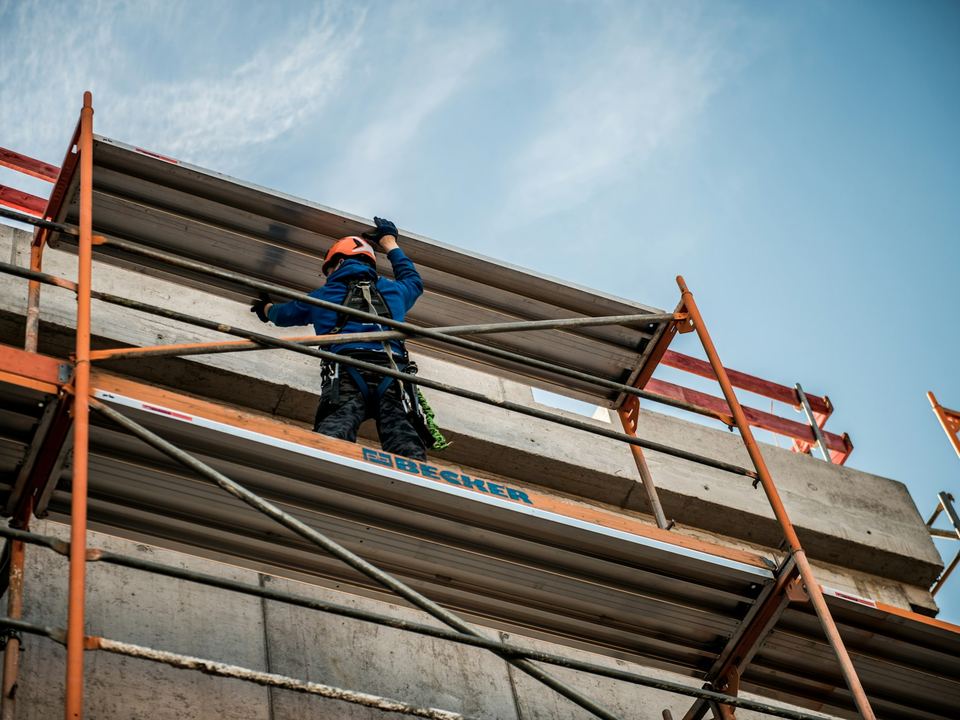
Kingston EIFS is operated by The Dom Construction Group LLC, and our own employees perform the EIFS demolition, flashing upgrades, foam installation, mesh embedment, sealant work and coatings. Our field team has roughly 19 years of experience in EIFS, stucco, masonry and coatings, sets its own pipe scaffold, and carries general liability, umbrella and workers' compensation insurance.
Rhinebeck, Red Hook and the rest of the mid-Hudson Valley by arrangement
Text two daylight photos for a straight read on your wall
Book spring work now. Winter assessments and estimates available.